Dating in 2026: Why the Future of Love Depends on Intent, Not Algorithms
In 2026, dating is undergoing a quiet but profound reset. After years of trusting algorithms to predict love, users are realizing that better matches don’t come from better data , they come from clearer intent. The swipe era optimized for engagement, not outcomes, leaving people with more connections and less meaning. This shift marks a new chapter in modern dating, where clarity, honesty, and readiness matter more than recommendation engines. The future of love will not be decided by smarter algorithms, but by platforms that help people be honest about what they want.
The Algorithm Promise That Didn’t Deliver
Dating apps sold us a beautiful lie: that if we just fed the machine enough data , our photos, preferences, locations, and late-night swipes, love would become predictable. Efficient. Optimized. We were promised better matches, faster love, and smarter compatibility through AI matchmaking, smart algorithms, and personalized dating experiences. And for a while, it felt like it worked. We matched more, talked more, dated more. The system was doing exactly what modern dating app algorithms were designed to do.
But somewhere along the way, something broke. The apps got smarter, and relationships got emptier. Today, we have more options than any generation before us, and less clarity than ever. Dating app burnout, ghosting, and mixed signals have become the norm. Conversations go nowhere. Chemistry disappears overnight. Connections feel like demos instead of beginnings. The mistake was simple, but expensive: we assumed that more data would create better relationships. But love was never a data problem — it was always an intentional dating problem. And in 2026, users are finally demanding clarity, authenticity, and intent-first dating experiences from the apps they trust.
How Algorithms Took Over Dating (And Why We Let Them)
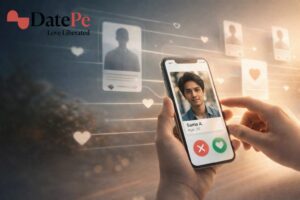
Let’s be honest: for the last decade, your dating app wasn’t a matchmaker, it was a slot machine. We fell for swipe culture because it was designed as a gamified system. It utilized the same variable reward loops that keep you refreshing your Instagram feed. The “Match” screen, the flashing lights, the confetti, the haptic buzz was never about the person on the other side; it was about the dopamine hit in your palm. The industry operated on a fundamental conflict of interest: Engagement-optimized design vs. Relationship outcomes. If you find “The One,” the app loses a customer. So, the algorithm was tuned to keep you browsing, not leaving. Algorithms are world-class at predicting behavior (who you’ll look at for 3 seconds) but they are notoriously blind to intention (why you’re looking). There is a massive, often painful gap between:
- Interest: “I like your face and your taste in brunch spots.”
- Readiness: “I have the emotional bandwidth to actually show up for a Sunday morning coffee.”
We let the algorithms take over because they offered the illusion of infinite choice. But in 2026, we’ve realized that infinite choice is just a fancy word for “permanent indecision.”
The Real Crisis of Modern Dating: Ambiguity
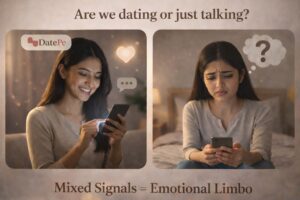
Everyone blames ghosting. But ghosting is just a symptom. The real disease in modern dating is ambiguity, the endless gray zone where nothing is clear and everything is optional. “Let’s see where this goes.” “I’m not sure what I want.” “Just going with the flow.” These phrases have become the default language of dating apps in 2026, where people are technically present but emotionally unavailable. We match, we talk, we vanish not because we’re cruel, but because the system rewards staying unclear for as long as possible.
Ambiguity keeps us swiping. Ambiguity keeps us hoping. Ambiguity keeps engagement metrics high. It is not a bug in dating app design, it is a design choice. And the cost is emotional exhaustion, not from rejection, but from uncertainty. In a world of infinite matches, algorithmic dating, and endless options, clarity has become the rarest feature of all. This is why users are now searching for intentional dating, clear communication, and intent-first dating apps that reduce confusion instead of amplifying it.
Why Intent Is the Missing Layer Algorithms Can’t See
The “Great Exhaustion” of the early 2020s happened because we tried to automate the one thing that can’t be coded: Human Intent. Intent is emotional, contextual, and most importantly time-based. An algorithm can see that you both like Tame Impala and hiking, but it can’t see that you are looking for a life partner while the other person is just looking for a distraction from their recent breakup.
The Math of Misalignment:
Interaction – Shared Intent = Burnout
Algorithms read patterns, intent requires declaration. When we hide our true intentions to “play the game” or “keep things chill,” we create a data vacuum. The cost? Wasted years, emotional fatigue, and a cynical view of romance. By 2026, the vibe has shifted. People are finally tired of the “see where it goes” ambiguity. We’ve realized that being “chill” is just another way of being “cheap” with our time. Clarity is the new aphrodisiac.
The Behavioral Shift Happening in 2026
And then, something changed quietly at first, almost unnoticed. People began choosing fewer matches and staying longer in conversations. Profiles stopped trying to impress and started trying to explain. “What are you looking for?” which once felt awkward, became essential. This is the rise of clear-coded dating, where intentional dating replaces endless swiping and dating app behavior shifts from volume to value.
Less swiping. More signaling. Less performance. More presence. Dating in 2026 is no longer entertainment. It is a decision. Users are treating their time like something valuable again. They are no longer chasing dopamine from matches. They are searching for direction, alignment, and clarity. And for the first time in years, the culture of modern dating is rewarding honesty over mystery and clear communication over curated ambiguity.
How Dating Apps Are Being Forced to Change
The market has spoken, and the “casino” model is failing. We are seeing a massive pivot where product design finally meets human philosophy.
Apps are moving toward Intent-First Onboarding. You aren’t just asked for your height and your hobbies anymore; you’re asked to define your “Relationship Season.” Are you in a season of exploration, or a season of building?
- Visibility of Goals: Your “Why” is now more prominent than your “Where.”
- Guided Interactions: Instead of the “Hey” apocalypse, AI-driven prompts are forcing users to have actual conversations.
- Verification as a Default: In an age of deepfakes, trust is the highest currency. Verification isn’t a perk; it’s a prerequisite.
The role of AI has shifted from a Puppeteer (controlling who you see to keep you on the app) to a Facilitator (helping you articulate what you actually want). It’s not replacing the spark; it’s clearing the brush so the spark can actually catch.
Why Algorithms Still Matter (But Must Take a Backseat)
This is not a rejection of technology. Algorithms still matter, just not as the driver. In the future of dating, AI matchmaking does not decide who you love. It helps you avoid who you should not. It filters noise, highlights alignment, and removes friction, but it does not replace human clarity and intention.
Matching should come after intent, not before it. AI in dating apps should support decisions, not make them. The best systems in dating apps 2026 do not ask, “Who might you like?” They ask, “What are you actually ready for?” And then they help you get there through intent-first dating design and smarter guidance, not endless suggestions.
What This Means for People Dating in 2026
If you’re dating right now, the rules have changed. It’s no longer about “playing the field”, it’s about curating your energy. Here is your 2026 survival guide:
- Choose the Platform, Not the Crowd: Stop going to the apps that prioritize volume. Go where the friction is. If an app requires more effort to set up, it’s already filtering out the “bored and browsing.”
- Signal Early, Signal Often: The “cool girl/guy” trope is dead. State your intent in your bio. If that scares someone off, the system is working.
- Avoid the Ambiguity Trap: If you don’t know why someone is talking to you after three days, ask. In 2026, “What are we doing here?” isn’t a desperate question, it’s a high-value one.
- Date with Purpose, Not Pressure: Intentionality doesn’t mean you have to pick out wedding rings on the first date. It just means you both agree on the direction of the boat, even if you haven’t reached the destination.

The goal is to protect your emotional energy like it’s a finite resource , because it is.
What This Means for Dating Apps and Builders
This is the moment of reckoning for dating platforms. The old metric was engagement. The new metric is outcomes. Not time spent, but relationships started. Not endless swipes, but conversations continued. Not more activity, but clarity achieved. This shift is forcing a fundamental rethink of dating app success metrics and how platforms measure real value.
Designing for addiction is easy. Designing for honesty is hard. But the dating apps that will win the next decade are the ones that replace novelty with trust and growth hacks with guidance. They will treat love not as a funnel, but as a responsibility. Because in the end, dating apps do not just ship features. They shape behavior, culture, and the way people learn how to connect.
The Future: Dating as a Designed Experience, Not a Game
We are witnessing the end of the “Swiping Era” and the birth of Dating Infrastructure. In the future, dating apps won’t be something you “play” on your couch; they will be the digital scaffolding for real-world connection. We are moving toward a world where technology finally serves love, rather than distracting us from it. Intent is the new algorithm. When we stop letting machines guess what we want and start using them to announce who we are, we reclaim our agency. We aren’t just “users” anymore; we are architects of our own romantic lives.
The game is over. The experience has just begun.
Closing POV
In 2026, the apps that win won’t be the ones with the smartest algorithms.They’ll be the ones that help people be honest about what they want. And that might be the most powerful feature of all.